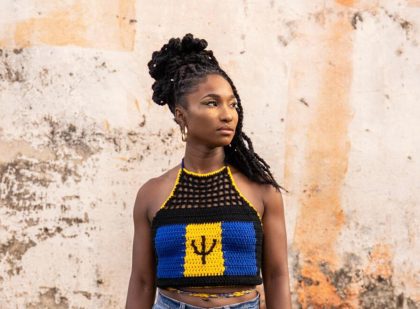
When/how did you realise that you wanted to pursue music?
From a young age, I felt that singing was a gift I had been given for a reason. I also knew that I could sing because of the reactions I received from people and how consistently I was told that I had a voice. But recognizing the gift and feeling that it had a purpose didn’t necessarily mean that I made a conscious decision to pursue music.
In a way, I feel like music has pursued me. There have been different points in my life when I’ve gone in other directions, but somehow I’ve always been drawn back to it. In 2018, I had this compelling feeling that I needed to write a song for Barbados. It wasn’t about starting a music career at that point; it felt more like something I was being called to do. I wrote a few songs then, but again, life continued in other directions.
In 2025, that pull toward music became stronger, and I began writing again, teaching myself production and allowing myself to take the calling more seriously. That’s when Barbados Calls began to take shape. So when I think about when I decided to pursue music, I’m not sure there was one defining moment. It feels more like music continued pursuing me until I finally decided to follow where it was leading.
What do you think makes you unique as an artist?
I think I’m still discovering what makes me unique as an artist. I’m hesitant to point to any one part of my background and say that alone makes me different, because there are many artists who may share similar experiences or influences.
What is uniquely mine is the way all of my musical influences come together in my own creative process. I grew up exposed to many different kinds of music, and while my Caribbean roots are important to me, my musical interests extend well beyond one genre. I’m drawn to everything from Caribbean sounds to jazz, strings, saxophone and different kinds of instrumentation and samples.
I haven’t explored all of those influences in the music I’ve created so far, but they’re sounds I’m naturally drawn to and want to incorporate as I continue developing. I’m still finding my sound, and I think part of what will define me as an artist is allowing those influences to come together naturally rather than deciding in advance what Anelé is supposed to sound like.
For you as an artist, is there a work of art or an artist that resonates with you on a profound level?
It’s hard for me to identify one particular artist because I have an appreciation for so many. What resonates with me profoundly is actually more of a sound and a feeling.
There’s something about soul music from the ’60s and ’70s, particularly certain chord changes, that affects me deeply. I couldn’t necessarily tell you technically what those chords are, but I know the feeling immediately when I hear them. There’s an emotional quality in that music that just reaches me.
I’ve always responded to music that way. Sometimes it isn’t about who is singing or even what is being said. A chord change, an instrument or a particular musical moment can make me feel something before I’ve had a chance to put words to it. That’s probably one of the things I love most about music.
When people engage with your work, what do you want them to get out of it?
More than anything, I want people to feel. I don’t necessarily want to determine what that emotion should be for them. Music can meet each of us differently depending on where we are in our lives, and I think there’s something beautiful about that.
Whatever emotion naturally surfaces when someone hears my music, I hope it speaks to something within them and, in some small way, helps them along their earthly journey. If something I’ve created can make someone feel understood, connected, uplifted, reflective—or simply allow them to feel whatever they need to feel in that moment—then the music has done something meaningful.
What does success look like to you?
Success, for me, is fulfilling my purpose. I’ve always believed that my voice was a gift given to me for a reason, so success is ultimately about honoring that gift and doing what I’m meant to do with it.
Of course, there are things I would love to experience through music—reaching people, performing, growing as an artist and having opportunities to share my work on a larger scale. But I don’t think any one achievement would define success for me. If I can look back and know that I used what I was given with intention, that I created what I felt called to create, and that it meant something to someone along the way, I would consider that a successful journey.