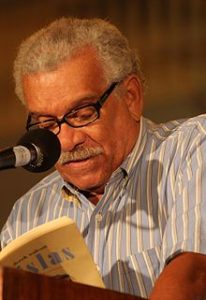
(Derek Walcott, VIII Festival Internacional, 1992). Credit: Jorge Mejía peralta. CC by 2.0. Click to view license.
A somber bell is being rung for all writers, thespians, and artists to hear. The St. Lucian poet and playwright, Sir Derek Walcott has passed away at the age of 87.
By fourteen, Walcott’s journey as a published poet began and his growth in the art world ascended in leaps and bounds. He had written five plays at sixteen and went on to further publish his first collection of poetry.
His continued dedication to writing over the years produced an extensive body of work earning him awards such as the 1992 Nobel Prize in Literature, W.H. Smith Literary Award, T.S. Eliot Prize
and Griffin Trust for Excellence in Poetry.
Some of his famous pieces including the plays Dream on Monkey Mountain;Beef, No Chicken; and The Capeman, and the poems such as The Sea is History, A Far Cry from Africa and Forest of Europe.
“Love After Love
The time will come
when, with elation
you will greet yourself arriving
at your own door, in your own mirror
and each will smile at the other’s welcome,
and say, sit here. Eat.
You will love again the stranger who was your self.
Give wine. Give bread. Give back your heart
to itself, to the stranger who has loved you
all your life, whom you ignored
for another, who knows you by heart.
Take down the love letters from the bookshelf,
the photographs, the desperate notes,
peel your own image from the mirror.
Sit. Feast on your life.”
― Derek Walcott, Collected Poems, 1948-1984
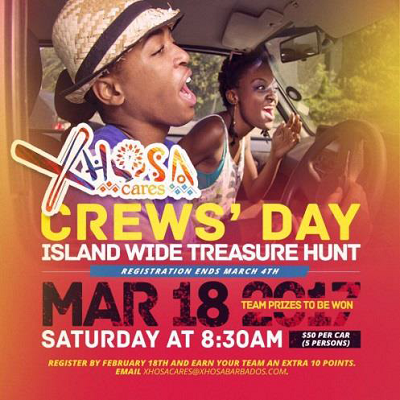
In March 2017, XHOSA CARES, extends its outreach, to engage the community in a fun Team Challenge. Gearing up for the summer season, Xhosa Barbados capitalizing on the Carnival excitement just ending, introduce the XHOSA CREWS TREASURE HUNT, a new XHOSA CARES Initiative.
With a mission to revolutionize the Crop Over Festival, two years later, XHOSA BARBADOS has not failed to deliver. Using their brand of excellence to raise awareness of Barbadian heritage; an appreciation for Barbadian culture and creative talent and funds for social causes and the sense of Charity in us all; they redefined Crop Over’s impact on general society. In their inaugural year, they supported the Diabetes Association of Barbados, in 2016, the Precious Touch Foundation’s ‘Make a Wish’ programme and launched a section with a Barbadian designer, showcasing homegrown talent.
Registered teams armed with clues will be on an Islandwide Treasure Hunt Adventure, on and off the beaten track for prizes. In the true Xhosa spirit, ‘We don’t Pose We Party’ with our crew, it will be a day of friendly competitive camaraderie, with a quest to win big for their favourite charity.
The Treasure Hunt starts at 8:30am on Saturday March 18, 2017 and ends with a Crews’ Lime and Prize Giving Ceremony from 2p.m the Vaucluse Raceway, St. Thomas.
The First Xhosa Barbados’ Crews Treasure Hunt is powered by the support of; Barbados Public Workers Cooperative Credit Union, Slam 101FM, Digicel, Burger King, WIBISCO, Stoli, Banks, Atlantis Submarines, N2N Make Up Artistry, J&S Fitness, Jammin’ Cruises, Bansuri Spa, Automotive Arts, Blades Trophies, Shine Automotive, Dare to Bare, Express Bikini, Roast, Jammin Cruises & Glitz Entertainment.
For further information and to confirm your joining on Saturday, contact Coordinator, Ms. Niara Fraser at info@xhosabarbabados.com or at telephone number (246) 255-1028
Kaveh Holder and Amaya Howard took home their crowns as Mr. and Ms. SMS Model Search 2017 this past Saturday, March 11th, when the finale of the months long competition was held at the St. Michael School. Last year’s winners, Joshua Soudatt and Tiara Pantlitz, returned to crown the pair. The first runners-up were Menelik Babb and Shonya Ward and the second runners-up were Jaren Worme and Alyssa Bryan.
The twelve contestants vying for the crown, strut their stuff in four segments; One Caribbean (in which they sported clothing depicting the flags of various Caribbean nations), Designer, Varsity (in which they embodied subjects and areas of the school curriculum) and Gems (in which the contestants’ gowns and suits represented various attractions around Barbados, such as Codrington College, Harrison’s Cave and Crop Over).
The show included musical performances by Romario Wilkinson, Megan Green and Joaquin and Nikita, as well as giveaways. Some of the contestants from SMS Model Search 2016: It Was Written, graced the stage once again and finalist from the upcoming Combermere School Phoenix Runway and the Alexandra School’s pageant had their moments to shine on the catwalk.
Holder and Howard were also the winners for People’s Choice, Best Gem and Best One Caribbean. Holder was named winner of the Africa Day Challenge along with Simone Williams and Howard walked away with the award for Best Designer with Menelik Babb. Altogether Holder and Howard took home four awards each, tying with Simone Williams who in addition to her win for the Africa Day Challenge, won Most Improved (Female), Most Photogenic (Female) and was the first female recipient of the Principal’s Achievement Award.
Congratulations to Kaveh Holder and Amaya Holder.
Visit our Facebook page for more photos from SMS Model Search 2017.
Here is the full list of winners:
Most Improved (Male): Nicholas Sobers Most Improved (Female): Simone Williams
People’s Choice (Male): Kaveh Holder People’s Choice (Female): Amaya Howard
Photogenic (Male): Jaren Worme Photogenic (Female): Simone Williams
Africa Day Challenge Winner (Male): Kaveh Holder Africa Day Challenge Winner (Female): Simone Williams
Best Varsity (Male): Menelik Babb Best Varsity (Female): Shonya Ward
Best Gem (Male): Kaveh Holder Best Gem (Female): Amaya Howard
Principal’s Achievement Award: Simone Williams
Best One Caribbean (Male): Kaveh Holder Best One Caribbean (Female): Amaya Holder
Best Designer (Male): Menelik Babb Best Designer (Female): Amaya Howard
Second Runner Up (Male): Jaren Worme Second Runner Up (Female): Alyssa Bryan
First Runner Up (Male): Menelik Babb First Runner Up (Female): Shonya Ward
Mr. SMS Model Search 2017: Kaveh Holder Ms. SMS Model Search 2017: Amaya Howard
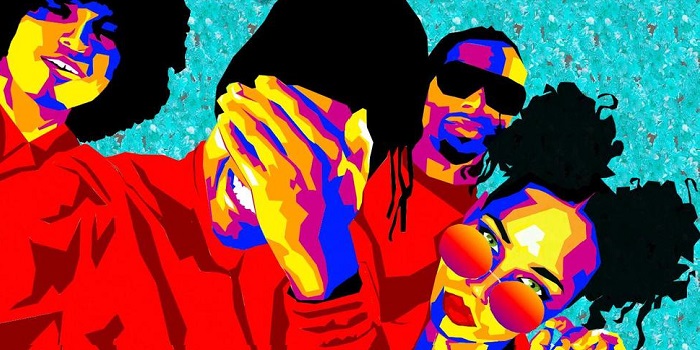
The Barbadian self-described “Caribpop” band Cover Drive released their new single “Breakdown” this afternoon. The single was accompanied by a lyric video, a format which has become common place for the band. The video sees the band performing in a recording studio intercut with images of front-woman Amanda Reifer and another female wrapped in strings of lights.
“Breakdown, which is the final single we will release before our sophomore album drops in April, shows a more mature Cover Drive. We have spent the last several years touring in the US and “adulting”, and from all of this comes a song that reflects the band’s growth without compromising the feel-good vibe we like our music to have,”
Episode seven of Popdown Podcast is here. K and Romario are joined by Reyda, who is making her podcast debut. This week they’re discussing the recently released Barbadian-UK co-produced film A Caribbean Dream, which is an adaptation of Shakespeare’s A Midsummer Night’s Dream.
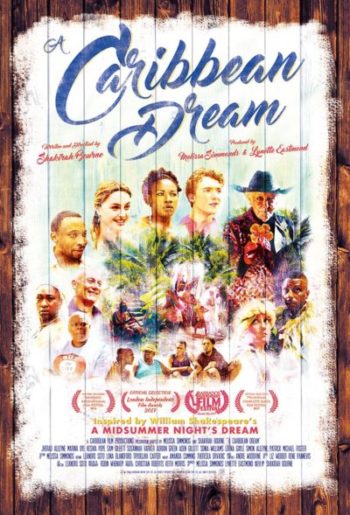
A Caribbean Dream is a romantic comedy drama adapted from William Shakespeare’s A Mid-Summer Night’s Dream. The film was written and directed by Shakirah Bourne – the writer of Two Smart and Pay Day – and adapted by Bourne and Melissa Simmonds, who was also a producer of the film. This adaptation of the well-known narrative is set in contemporary Barbados.
In this story, Hermia (Marina Bye) is set to wed to Demetrius (Sam Gillett), but she is in love with Lysander (Jherad ‘Lord Zenn’ Alleyne). Hermia’s father, Egeus, brings them before Theseus, who is to preside over the conflict. He rules that if Hermia does not marry Demetrius, she must forfeit her inheritance. Meanwhile, Helena (Keshia Pope) is in love with Demetrius, who will not even give her the time of day.
In the world of the Fairies, Oberon (Adrian Green), wants a little boy – who is in the possession of Titania (Susannah Harker) – to be his henchman. Having been refused the boy, Oberon has Puck (Patrick Michael Foster) retrieve a flower which he then uses to place a spell on Titania. Seeing the conflict among Lysander, Demetrius, Helena and Hermia, Oberon sends Puck to use the spell on Demetrius so that he will fall in love with Helena. However, Puck puts the spell on Lysander, making him fall in love with Helena and thus causing a host of confusion.
The most Barbadian element of the narrative is the re-imagination of the Craftsmen from the original play as fishermen from Six Men’s Bay, who seek to perform a play – King Ja Ja and Becka – to win the talent competition put on by Theseus.
My expectation was that the adaptation would not merely be set in present day Barbados, but that it would embody what can be considered “the lived experience of Barbados.” This was the impression I got from all of the promotional media; especially as the promotion features the song “Real Real Bajan” by AzMan. It would seem, however, that this was not the director’s vision.
A Caribbean Dream indeed contains markers of being in Barbados such as the inclusion of Bajan dialect, Fore-day Morning, Bajan music and the fishermen with their King Ja Ja play. Although the Barbadian elements do not seem like an afterthought, they do feel shoe horned into the film; causing their impact to be superficial as opposed to being an integral part of the narrative. Thus, they do not mesh tremendously smoothly with the elements that are lifted from the original play.
For example, the insertion of Fore-day Morning celebrations into the narrative feels tremendously forced. There is no motivation for the characters being there beyond the script saying that they should be – or perhaps it was there to show off the island. The film is really just the traditional play on screen, but delivered very cinematically. It appears that the goal was to present a beautiful visual experience in a magical world set in Barbados with the enchantment of the Shakespearean English; it was not to be a reimagining.
As expressed by Bourne at the preview of this film held during the Barbados Independent Film Festival, the film seeks to make the narrative accessible primarily to students whom would likely be doing the CXC. With that as the intent, I believe the film is successful and justifies the use of Early Modern English; which makes up the majority of the dialogue. I believe, however, that there will be some disconnect with the general viewing audience because of the use of the original language. You can follow what is happening for the most part, but at other instances, by the time you’ve translated one piece of dialogue, two or three other lines have passed and you are left a little bewildered.
When the film started, I was very captivated by the pristine visuals and sound mix. However, as it progressed, this captivation wore off as I laboured to follow the narrative because of the language. It is for this reason I believe that the film did not illicit a rife of laughter from the audience throughout the film, as most of the comedy comes from the dialogue in Shakespeare’s play.
There are moments of laughter, but those moments mostly hit the audience through the actions of the characters. The most engagement from the audience is the King Ja Ja and Becka play at the end put on by the very Bajan fishermen. That group was a great ensemble played by Simon Allyene, Angelo Lascelles, Ishiaka McNeil, Matthew Murrell and Lorna Gayle, who is from the UK.
The acting in this film is some of the best – if not the best – put to screen for a Barbadian produced film. The cast, composed of Barbadian and British talent, delivered remarkable performances.
My personal favourite was the Barbadian actor Patrick Michael Foster. His delivery reminded me that the work I was watching was Shakespeare, when other moments in the film lacked that magic. Watching this adaptation, one might forget the original play was written as beautiful poetry. It feels as though the cutting down of lines was so utilitarian that the spirit of the aesthetic of the original verse was lost.
I felt a little disappointed at the lack of rhythm and rhyme from the writing and line delivery. Rhythm and rhyme is what makes Shakespeare an enchanting experience! To have fallen there is to remove, in my opinion, the essence of his work. I’m not sure if it was irresponsible writing, rushed acting, or unfamiliarity with the heart of the content, but there is a lack in the film. Foster, however, masterfully injected that rhythm and rhyme. He truly is a superb actor and he reminded me that this is poetry.
On the other hand, the performance of Keshia Pope lacks authentic delivery. Throughout the film, it seems like she doesn’t really understand what it is that she is saying. While her delivery does not particularly lack inflection, every line seems to be delivered with the same emotion of a begging child. Indeed, Helena’s character is an emotional wreck for not being able to have the love of Demetrius, but I do not believe that everything Helena says will continually take on a whiney inflection or cadence.
The technical execution of this film is very good. The cinematography is beautiful throughout. It really does sell the magical vision of the director. It is the most fantastic production design work of any Barbadian produced film. Of particular note is the makeup of the character Bottom when she is transformed into a Black Belly Sheep. I loved the costuming; particularly of the fairies in the forest, as it is inspired by Kadooment/Carnival themes in addition to emanating that sense of a magical experience. The only costume that felt out of place to me was Oberon’s; I just kept seeing Adrian Green in green papier-mâché.
I can objectively say that this film is the best sound mix and edit of any feature length Barbadian produced film. Additionally, I loved the music of the film; great work from Andre Woodvine, as usual. The song ‘Real Real Bajan’ by AzMan was stuck in my head long after watching the film…but I found it a very oxymoronic song to be used for the start and ending of this film.
A Caribbean Dream is the most technically proficient Barbadian film to date. However, it is not particularly authentic to the lived experience of Barbados, although it advertises itself that way. I don’t feel as though this film will be held up as the quintessential Barbadian film narrative; that film is yet to be made. Will it be commercially successful? Maybe. But with great distribution and marketing overseas. Not because it will not be liked here in Barbados, but because of math and its slightly-over-one-million-dollar budget.
I left the film feeling like I had an enchanted visual experience, but confused as to why anything that happened occurred the way it did. For example, in the original play Theseus is a Duke, so we understand to some degree where his authority to determine that Hermia can lose her inheritance (or her life in the original play) comes from. In this film, he is just a third party; we have no idea of who he is really.
Nonetheless, I loved watching this film. The language was a challenge, but the film was a magical ride and not particularly pretentious – for those two hours, it’s a fun show for anyone.
You can watch A Caribbean Dream at Limegrove Cinemas and Olympus Theatres until March 7th.
A Caribbean Dream is a Barbadian/UK co-produced film, which is an adaptation of the Shakespeare play A Midsummer Night’s Dream. Shot on location at Fustic House in St. Lucy, the film features both local and British talent in front of and behind the camera. It tells the story of four young lovers, a disagreement between a fairy king and queen and five fishers from Six Men’s Bay who are to perform the play King Jaja and Becka.
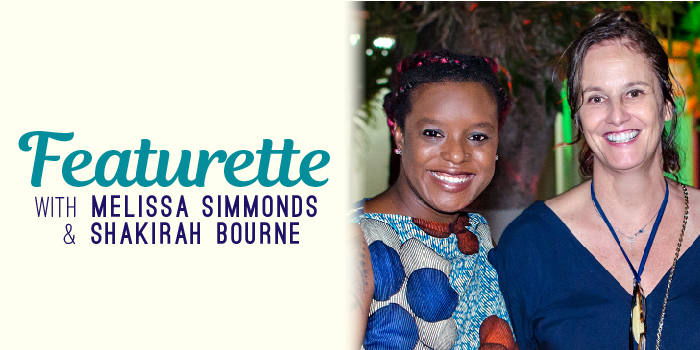
Producer Melissa Simmonds and writer-director Shakirah Bourne spoke to use about the film.
1. What inspired you to make a Bajan film adaptation of A Midsummer Night’s Dream?
Melissa Simmonds: I was invited to Fustic House in 2013 by a friend and as I was being given a guided tour of the grounds, I just started to visualise it. Having lived in both countries [Barbados and England] for over 20 years, I knew how the traditional tale could be [re- imagined] here. I also had a theatre company here called The Gale Theatre of London and Barbados and so I was very familiar with the Barbadian actors and I knew how the film could be cast.
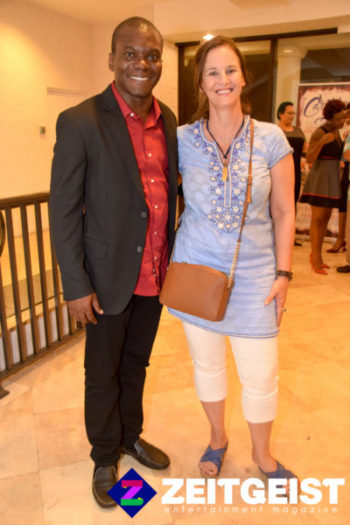
2. Was Shakirah your first choice for writer and director?
MS: Yes Shakirah was my first choice for writer as I had read her collection of short stories and knew her style and vernacular and that she would bring out the humour of the piece perfectly. I think if Shakespeare could look down he would love her screenplay. As a director I was not familiar with her work but then I was a first time producer and I figured as the writer she was [a] good choice as director. This has been a huge learning curve for us all in first time positions but Shakirah has always done what’s best for the film and this I respect enormously. Shakirah is a huge talent and a passionate film maker.
3. When you were approached to write and direct A Caribbean Dream, were you hesitant to accept or did you say yes immediately?
Shakirah Bourne: This was the biggest film project I have done to date, and my first as a hired director, so I did have to give it some thought before I committed.
4. What was your approach to adapting A Midsummer Night’s Dream into a Bajan film; how did you go about “bajanising” it?
SB: When I was hired, the producer Melissa Simmonds already had the core set of [adaptation] ideas for the movie: the Fustic House location, the idea for the film to be set during [Crop Over], and during a full moon with the fairies being household staff during the day. It was my job to flesh out the script and so I would have brought different ideas on how to make it Bajan. For example, in the original play Bottom is transformed into a donkey, but in the adaptation she is transformed into a sheep. We included some Caribbean Folklore – Papa Bois, Wata Mama etc and then elements of calypso and spouge. Instead of acting the story of Pyramus and Thisbe, the fishermen created a new play “The Untold of Story of King Ja Ja and Young Becka.” I don’t want to give any more spoilers but basically I tried to keep the essence of the Shakespeare with Barbadian nuances.
5. What was the most difficult thing about adapting the text?
SB: Understanding the old English lol I actually had to read the English and Shakespeare version of the play.
6. Was the plan always to have this film be a Barbadian-UK co-production? How did that come about?
MS: Yes, always the plan; that’s my trademark. I have lived in both countries all [of] my life and I love uniting the talent but only where I feel I have to. At the time I felt it crucial a UK DOP [Director of Photography] and Sound person were involved and then we needed white actors as I could not find the right ones here.
7. What was the budget for the film?
Low budget but not micro budget.
8. How did you go about finding actors for the film; what was the casting process like?
MS: I had them all in mind from long ago and did a workshop for Shakirah very early on so she could see what I was thinking and with the UK ones we filmed and sent her the link for approval.
SB: Some of the actors were already on board before I was hired. Melissa had worked with Jherad Alleyne, Simon Alleyne, Levi King and many other Bajan actors in theatre, and always knew they were right for the parts. I was in total agreement having worked with them in film. There were Barbadian and UK auditions to fill the rest of the roles, and we had support from Casting Barbados for secondary roles.
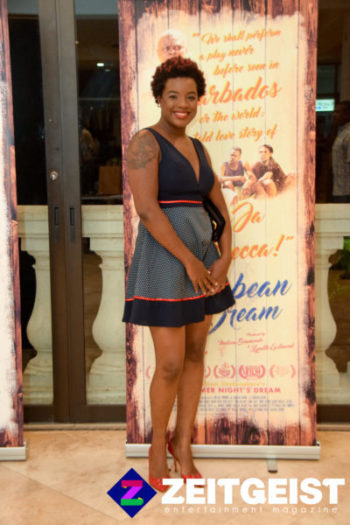
9. As the director, what was your vision for the film and how did you get the best performances from your actors?
SB: Although it was a Shakespeare story and language, I wanted the Barbadian identity to shine through. This is why I instructed actors to make the language their own – think about how you would say the sentence in Bajan – including the sighs, the ‘cha’, the stupses [Barbadian parlance for sucking one’s teeth], the rhythm and the tone, and do that with the Shakespeare. It had [to] sound natural and believable, as if they were born saying “thou” and “art.”
10. Why did you decide to have some characters speak Early Modern English and some characters speak Bajan? Why not modernise the language and have the entire cast speak the same way?
MS: Very important to me as a producer to have a combination of both; with this adaptation you have the collaboration of two cultures. The Shakespeare and all [of] the Barbadian folklore, setting and vernacular but no so strong a dialect that it can’t be understood around the world. My sole aim as a Producer has been to make something that will sell internationally so we can get the Bajan talent out there!
SB: Initially, I wanted to completely transform the language but when I heard actors speaking the Shakespeare with the Bajan dialect at a workshop, I found it hilarious. Also, having the Shakespearean language serves as an educational tool for students studying the play, where they can learn the speeches and quotes.
The difference in language was also used as a way to highlight the echelons. In the original play, the story was told between royalty and their subjects. This adaptation highlights the happenings of the upper class socialites on the mansion on the hill, and then of the local fishermen relaxing on the beach. In Barbados, the language is always spoken differently depending on the context and situation.
11. Why did you choose to shoot at Fustic House in St. Lucy?
MS: I was led there by the universe and it’s a film-maker’s paradise. From the minute I showed it to Shakirah and to Robin Whenary the DOP who [sic] she chose, they both were inspired. It’s [a] very inspirational setting. From a practical [POV] it was good too as we could all be under one roof.
SB: Again, this location was on board long before I was. Melissa Simmonds was inspired by Fustic House to do a film adaptation of the play. The architecture designed by Oliver Messel – one of [the] UK’s most prominent stage designers of [the] 20th century. On the property, there is a pool and swamp, an Amerindian cave, and grounds for [a] forest, which we all utilised in the movie. It was beautiful and convenient. We only had to leave the location a few times to shoot scenes at the Airport, St Andrew’s Church, and Six Men’s [Bay].
12. How long did filming take and what was the experience on set like?
MS: We shot in 3 weeks and it was not easy as it’s [sic] primarily night shoots. The first night it poured with torrential tropical rain and we all ran for cover under a tiny tent, protecting expensive equipment. I went out the following day to hire a proper canvas marquee for future down pours but it never rained again like that. It did rain of course a bit on and off [throughout] and that was always a challenge for crew but I consider that first night a rain blessing. Many of the female team had worked in film before but never in the roles they had on A Caribbean Dream, so it was a learning curve for us all. That’s life. We did it together and we made it happen.
SB: It was approx [sic] 3 weeks of chaotic madness. We shot during Crop Over so we had to deal with noise from nearby parties and bad karaoke. [There] was a lot of rain which delayed shooting and caused equipment failure, even a small earthquake (though we didn’t feel it) and [a] tsunami warning. Even on the final day, trying to get shots over drunk revellers at Foreday [M]orning was a challenge.
13. Were there any notable changes made between pre-production, production and post-production?
MS: Yes [during pre-production] our budget jumped hugely and I nearly shelved the film. Post we did lots of pick up shots to fill in the sense of time passing and in post change was constant. You make or break a film in post and I unlocked the film 3 times to get it to where it is now but I am an obsessive and I was lucky to have a director who let me do this but also the circumstances were not normal ones. Shakirah was in Bim [local nickname for Barbados] and I was in [the] UK where post was happening so it was very collaborative and [trans-atlantic] and could not have been made outside [of] the digital age!
SB: Plans were in place for this film to happen for long time. I can’t think of any significant changes at the moment.
14. What was your favourite and least favourite thing about working on the film?
MS: None of [it’s] been easy for me as I am [a] first time producer. The best thing so far was being nominated for [the] London Indie [A]wards and [the] LA Indie [A]wards and getting into [the] Charlotte Black Film Festival but I won’t be happy till [sic] we have sold it and made money otherwise we can’t make more films. I loved seeing the cast come alive in their roles and I loved seeing the colour [palette] work with Leandro Soto’s superb costumes against the green foliage backdrop of the Fustic [H]ouse grounds.
SB: My favourite thing was being able to work with [a] local and international cast and crew, and being able to stay in a beautiful and magical place like Fustic House.
My least favourite thing would probably be constrictions due to time and budget.
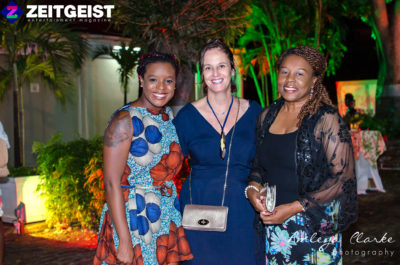
15. What was it like having the film previewed at the Barbados Independent Film Festival?
MS: That was just timing as we were not ready for the BFVA [The Barbados Film and Video Association’s Barbados Film and Visual Media Film Festival] and the BIF [Barbados Independent Film Festival] had popped up out of the blue but I am very supportive of Sir Trevor Carmichael as he supported me with the Gale Theatre company. BIF was serendipity but we hope to be screened in the BFVA this year too.
SB: Home drums always beat first for me. It was a gorgeous and new venue, it was sold out, and there was a good response from the audience. I couldn’t ask for much more.
16. Where do you think this film stands in relation to all other Barbadian films and what impact do you think it will have on the industry?
MS: I have not seen all [of the] other Barbadian films so I can’t answer you honestly. [We] are just glad to be part of the emerging film industry in Barbados and I want to sell it so we can make more. The judge of that will be the festivals and the sales and the audiences. Let’s see[.]
SB: The film is of high quality, and very ambitious – being a fantasy and using special effects makeup and costuming. We have a few filmmakers who already experiment with using special effects, and creating films in this genre, but the content is always limited due to budgetary restraints. I’m hoping that the film will inspire even more ambitious films/stories, and that they will have support – both from funding institutions and audiences, to reach the screen.
17. What is your ultimate goal for this film? What do you want audiences to take away from it, particularly Bajan audiences?
MS: To sell it so we can make more films and see the Bajan talent on an international platform. There are some things you can’t control and I don’t mind what people take away from it…some will love it and some won’t but for me it’s a small step in embracing each [other’s] cultures. When we live in such a racist world with the likes of Trump in power I would hope this film with its mixed race themes reaches out in a positive way.
SB: To continue to show that Barbadians can create world-class content. I want the audience to appreciate the film, and continue to feel the need to tell their own stories and support local filmmakers.
18. What’s the next step for A Caribbean Dream?
MS: For Caribbean Film Productions Ltd is the company that made A Caribbean Dream[,] I would like to develop two more films; A Caribbean comedy and A Caribbean Ghost story and then shoot back to back in 2020.
SB: The producers are working on international distribution right now.
19. What’s next for you?
MS: Do nothing. Try to earn some money from my other business which I have neglected for three years. Myself and Lynette Eastmond have worked on sweat equity but this is what you do on your first film.
SB: Last year I focused on stage plays, and this year I want to focus on novel writing. In terms of film, I’ve been in meetings with a few other film producers to discuss future projects, along with my own projects with Bajans In Motion. It’s all at the stage where we’re seeking funding to move forward.
A Caribbean Dream is currently showing at Limegrove Cinemas and Olympus Theatres until March 7th.
It was a quiet Wednesday evening in Queen’s Park when I sat down with Jherad Alleyne and Keshia Pope, the two Barbadian lead actors in the upcoming film A Caribbean Dream. The first Barbadian-U.K. co-produced film, it’s an adaptation of Shakespeare’s A Midsummer Night’s Dream, which was shot on location in Barbados at Fustic House in St. Lucy, written and directed by Barbadian filmmaker Shakirah Bourne and produced by Melissa Simmonds.
Jherad stared acting in 2006. It was at this time that he had started rehearsing for Laff It Off, performing in 2007 and joining the show again the following year in 2008. He acted with the Gale Theatre of Barbados and London – of which Melissa Simmonds also served as producer – and was sent to do a four-week summer course in London. He later returned to the city to do a three year acting course.
“I don’t know,” he says, laughing, when I asked him what sparked his love for acting “I just like it…after I left UWI I got more involved with acting and it felt right so I just kept doing it.”
Similarly, Keshia is unsure of when she started acting, but was a dancer with Praise Academy of Dance. Like Jherad, she’d met Melissa Simmonds prior to working on A Caribbean Dream. Her first stage play was The Mountain Top.
“From young, I could tell you,” Keshia says “I would be home and I would be rehearsing all [of] the ads on TV and I’d be singing them…I was always very theatrical from small. But, I don’t know what it came from because there’s nobody else in my family that is this way.”
Both actors were involved in other motion pictures before appearing in A Caribbean Dream; Jherad did a bit of acting in London, worked on Secrets with Cecily Spencer-Cross and a yet to be released series with Marc Gibson and Keshia appeared in all three of the Hush films by Marcia Weekes.
Because they already knew Simmonds, she told them about the film. Keshia auditioned for the role of Helena but Jherad was not in the island during auditions.
“You know what we did?” He recalls excitedly as the memory hits him. “There was a workshop some years ago…During that I guess is when they cast me for [the role of Lysander].”
“[Lysander] is a pretty cool guy. He’s in love with Hermia initially. And then it gets weird.” Jherad says of his character with a knowing chuckle.
“Helena is in love with Demetrius,” Keshia says. “I think what happens is that I’m trying to get him to love me…But he is not in love with [me]…[Helena is] not a very confident person and she’s very wounded by his not liking her…”
A significant portion of the dialogue in the film is spoken in Early Modern English (the language in the time of Shakespeare), or is at least very much like it. While both actors acknowledged that it was challenging and that there was indeed a learning curve, Jherad was aided by his previous experience with the language, but it was a little more difficult for Keshia who had never worked with it before.
“In the beginning [the] four of us [herself, Jherad and their co-stars Sam Gillet and Marina Bye] came together for a rehearsal and they had their lines down pat. Me, I was still trying to get my lines and remember my lines.” After the first shoot was completed and with help from her co-stars, she said, she started to get into it.
Jherad had fun and enjoyed being on set. “It was nice to be heading to that location everyday…the fact that that setting is in Barbados… I don’t think a lot of Barbadians think that those kinds of places exist here…it was gorgeous.” Another highlight for him was “…being soaked under a tree, pretending it was raining with insects all around between twelve in the morning and two o’clock in the morning.”
“Yea, that was not nice for me though ‘cause I was freezing.” Keshia chimes in. “The highlight for me was meeting and spending time, primarily with Sam and Marina…I really enjoyed spending time with Mandy…She would go on her guitar and she would play music. She would sing for us. We would join in with her…The Bajan crew primarily though, they would come and…we would sit and talk…”
For Keshia, there was no real difference in working with the British cast and crew. “We were quite like each other.” She said. Of particular note for Jherad was the “camera guy.”
“I enjoyed watching the camera guy work. Because he’s like a machine. Like he just did it. He was just going, going, going all the time with the camera.”
Jherad sees the film as a step in the right direction for the advancement and the development of the Barbadian film industry. On the other hand, for Keshia, the significance of A Caribbean Dream to the growth of the local film industry still has not hit her; she doesn’t think of the film in that grand of a scheme and thinks that once it has achieved everything that it will in the future, she will be able to see the full of scope of its impact.
“I guess it’s been so long since we finished and so much has happened in between then that the fact that it’s actually being released now…it’s exciting but it feels almost as if it’s not happening to me so much as it’s happening, kind of like, in front of me.” Jherad says of the film’s impending release.
Keshia is a bit more nervous about the release and is anxious to hear how audiences react to the film. Her foremost concern is her performance; she wants to use the film as a stepping stone and hopes that her acting was of a high enough standard that people seeing it would want to hire not only herself, but her co-stars and others who worked on it.
Speaking about viewing the film at its preview she said: “When I saw it, I mean there were some parts where to me I wasn’t as clear as I could have been, in terms of diction, but overall I was like ‘Yea, I actually didn’t do pretty bad.’”
Jherad, unlike Keshia, has not seen the film as yet.
“He doesn’t like seeing himself.” Keshia explains, prompting him to laugh shyly.
“I don’t like hearing myself. I don’t like looking at myself.” He adds.
Despite not having seen the film himself, Jherad describes it as “very local and… very international at the same time”, something he thinks that Barbados should be striving for in all things. That is one of his favourite selling points along with the fact that; “You will get to see Barbados on a whole in a way that you may not have thought [that] you could see Barbados before. You get to see Barbadians in a light that you might not have thought to see Barbadians in before.”
“I would just go and tell people ‘Go see it! I think you’d enjoy it. It’s funny.’” Keshia said.
Now that their work on the film is over, Keshia says she doesn’t have any projects in the pipeline. Jherad will continue to do his work on social media and would like to go to Canada later this year. He would also like to write and produce plays in Barbados.
“That’s what I really want to do…I think there’s a space for it…people right now, they want to see the Barbadian culture. They want to see Barbadians performing and they want to see Barbadians in the light that they’ve typically seen international stars [in]…there’s a hunger for it…And that communal space of people being together and laughing together that you see in the theatre, I think that would work well right now.”
He plans to start with a comedy – it’s what Barbadians are familiar with and that follows from the brand he’s built for himself on social media – and get steadily more serious in tone with each successive production.
As we wrapped up, they offered a few words of advice for young people who would like to get involved in the arts.
“The arts have changed very, very quickly,” Jherad says. “The way is there. The opportunities do exist, but…you have to put them together yourself…There’s no straight line to walk in the arts in Barbados…”
“I would always say…‘Follow your dreams.’ For me, when I went to UWI I was doing IT and management…And when EBCCI [The Errol Barrow Centre for Creative Imagination] opened I said ‘You know what? I want to do this.’ And I went and applied…And look where it has gotten me today…So if you want to do dance, acting, whatever it is…you still have to do what you have to do. Because you may be the person to create the straight line.”
See A Caribbean Dream at Limegrove Cinemas and Olympus Theatres from March 1st – 7th. Watch the trailer below.
Here it is! Episode six of Popdown Podcast. The Academy Awards are this Sunday so K and Romario thought they’d have some fun and make some predictions about some of Sunday’s winners!
Every once in awhile, a new artist takes the airwaves by storm with a song that can only be described as a viral sensation. Then as time goes by and everyone patiently awaits the next hit song from the artist, nothing happens. It’s like the artist disappears from the face of the earth or you watch their slow descent from grace. That’s right, the one hit wonders.
This list highlights some of the most notable one hit wonders in Barbadian soca music. The songs here were picked based on their impact compared to other songs released by the artist (if any are available). Click the song titles to listen to them.
I have to be very honest right now: this song is nothing like I remembered it. When I was doing research for this list and read the title of this song, I was elated. Original Duck! Boy, what happened to him? I remember seeing him perform on CBC, with the most hilarious wukup in life, and the crowd just cheering him on chanting: “Go Duck! Go Duck!” 13 years later, as I sit and listen to this song, I don’t have to wonder why he was a one hit wonder. It’s painful to sit through. I can’t tell what the message of the song is. All I gathered is, people like things, he also likes things, then there’s a saxophone. It’s just super weird. I feel like it may be satirical, poking fun at dancehall music, but maybe I’m trying to give it too much credit and it’s really just a bad song.
All credit for this selection goes to @zoemarks. 18 minutes before I sent this post to be edited, I realised I only had 4 songs in my top 5 countdown. I did as one does and rushed to the group chat to ask for a suggestion and they came through! Pity no one ever comes through when we’re planning a lime. I’m not bitter, though. Don’t watch anything. It’s cool. I’m not hurt.
This song is hilarious. I’m honestly not sure how I forgot about it. It’s well written, witty, for lack of a better word and on a catchy beat that reflects the songs of the time. Certainly a happy classic, it’s sure to put a nostalgic smile on any face at any pork lime or party.
“You barely want chow mein in you. Chinese in you.”
Being a one hit wonder isn’t necessarily a bad thing. Sometimes the persona may be only good for one thing and it’s important to understand that. As far as I know, he only created one song for this character.
I don’t have any Asian friends so I can’t ask if this is offensive to them, but one thing it is for sure is hilarious; poking fun at popular Chinese stereotypes and Barbadians’ relationship with them.
“Wunna hiding wunna dogs and hidin cats, Getting on like I want dem for my snacks!”
To top it all off, the song has an accompanying dance that anyone can join in with. All in all, it’s pretty enjoyable.
There was a period of time when I swore I fabricated the memory of this song. I couldn’t find it anywhere. Only after a very intense search (and I mean intense; I went to page THREE on Google), was I able to discover anything about this song. Up to this day, I can’t find this song for my personal collection. If you’re reading this and you have it, please send it.
This song is hilarious. The lyrics have Mr. Wite Wine debunking an age old myth; that white men can’t wukup. I vaguely remember seeing a hilarious performance of this song, but unfortunately, Mr. Wine didn’t quite have too many wuks left. He released another song in 2004 entitled “Tourist Wheel”, which isn’t exactly terrible, but it did show that maybe Wite Wine was a one trick pony.
I always say Crop Over is like a second Christmas, with the joyous, festive atmosphere it brings. Mr. DJ took it to another level when he sampled the seasonal tune “My Favourite Things.”
“I love de soca de bashment it brings. These are a few of my favourite things.”
2005 boy, when bashment was the “in” word. This song is honestly one of the more timeless entries on this list. It still gives that warm feeling associated with nostalgia, yet it doesn’t make me cringe at its cheesiness. It’s a pity that Mr. DJ didn’t pick up much after this song. He had songs out as recently as 2014, as well as a moderately well known song, “Can’t Stop Dis”. Better luck in 2017 fam.

 In March 2017, XHOSA CARES, extends its outreach, to engage the community in a fun Team Challenge. Gearing up for the summer season, Xhosa Barbados capitalizing on the Carnival excitement just ending, introduce the XHOSA CREWS TREASURE HUNT, a new XHOSA CARES Initiative.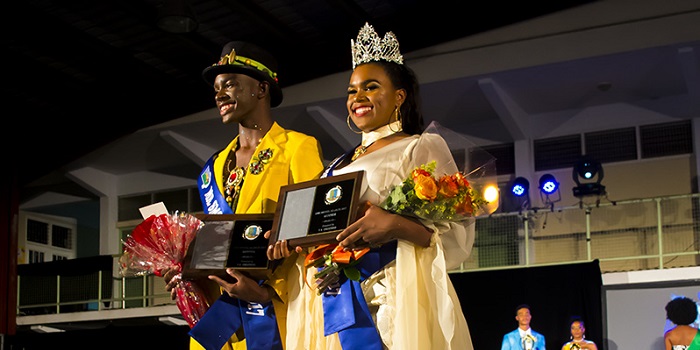
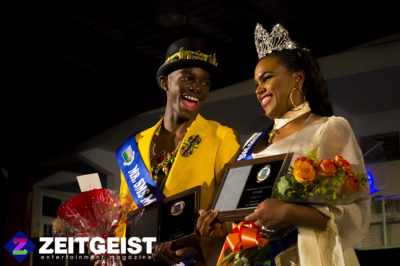 Kaveh Holder and Amaya Howard took home their crowns as Mr. and Ms. SMS Model Search 2017 this past Saturday, March 11th, when the finale of the months long competition was held at the St. Michael School. Last year’s winners, Joshua Soudatt and Tiara Pantlitz, returned to crown the pair. The first runners-up were Menelik Babb and Shonya Ward and the second runners-up were Jaren Worme and Alyssa Bryan.
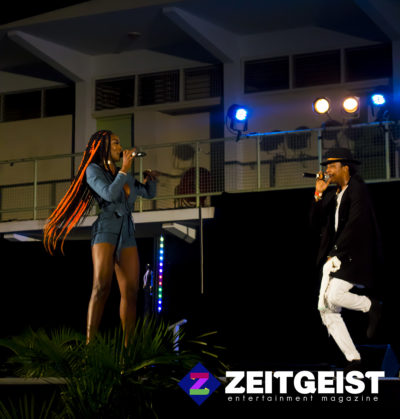 The show included musical performances by Romario Wilkinson, Megan Green and Joaquin and
 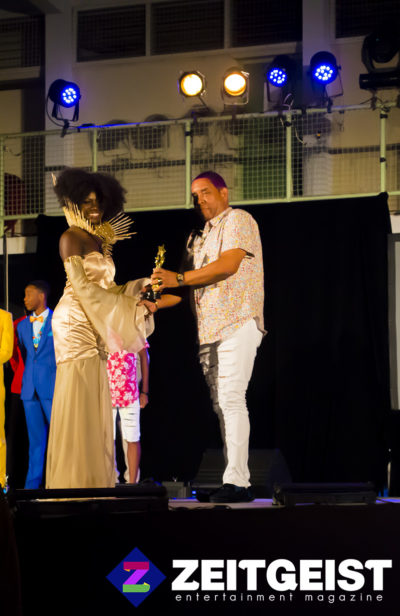 Most Improved (Male): Nicholas Sobers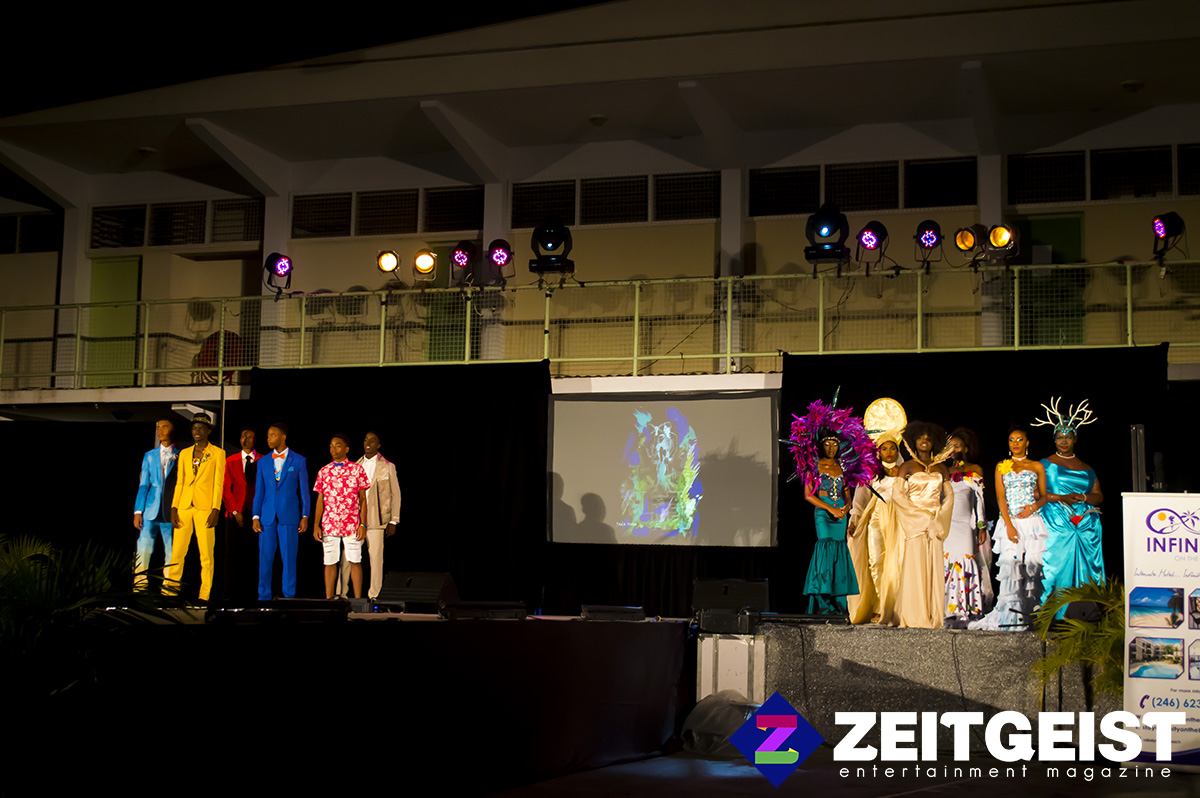
 The Barbadian self-described “Caribpop” band Cover Drive released their new single “Breakdown” this afternoon. The single was accompanied by a lyric video, a format which has become common place for the band. The video sees the band performing in a recording studio intercut with images of front-woman Amanda Reifer and another female wrapped in strings of lights.
 A Caribbean Dream is a romantic comedy drama adapted from William Shakespeare’s A Mid-Summer Night’s Dream. The film was written and directed by Shakirah Bourne – the writer of Two Smart and Pay Day – and adapted by Bourne and Melissa Simmonds, who was also a producer of the film. This adaptation of the well-known narrative is set in contemporary Barbados.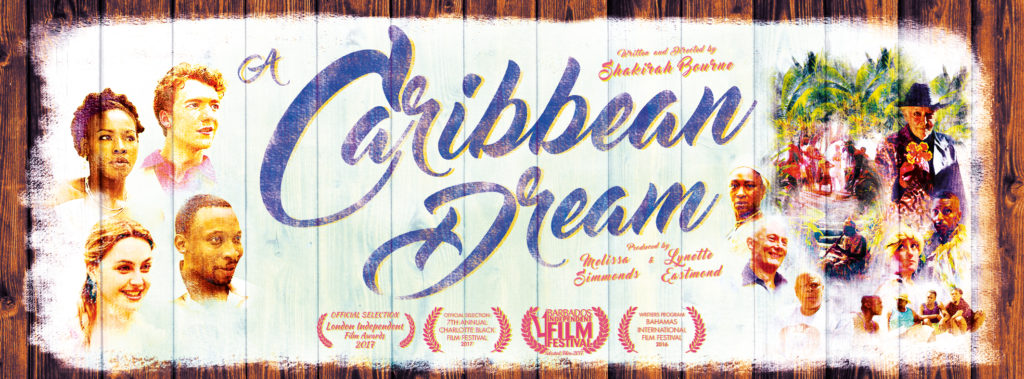
 2. Was Shakirah your first choice for writer and director?
 9. As the director, what was your vision for the film and how did you get the best performances from your actors?
 15. What was it like having the film previewed at the Barbados Independent Film Festival?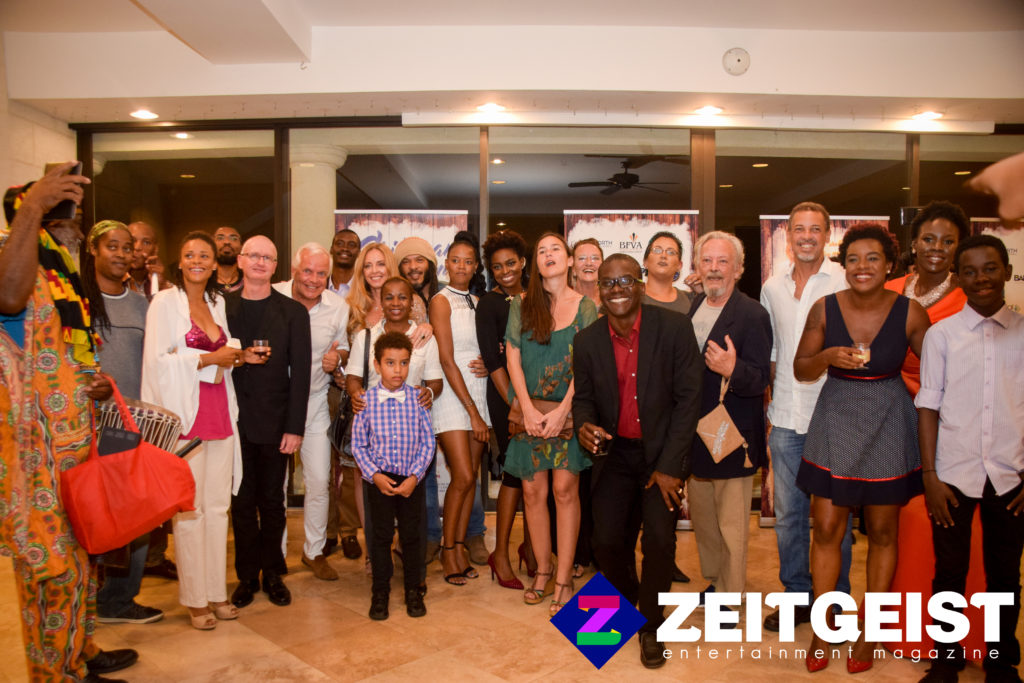

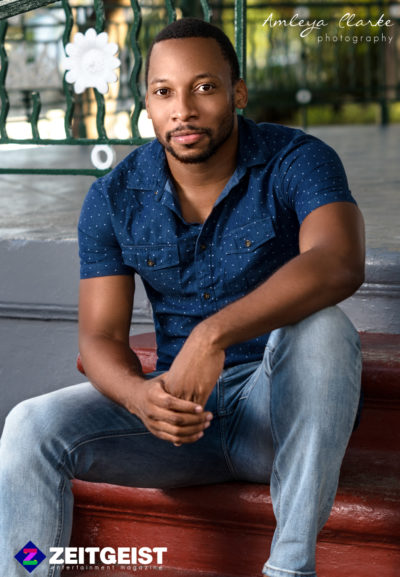 stared acting in 2006. It was at this time that he had started rehearsing for Laff It Off, performing in 2007 and joining the show again the following year in 2008. He acted with the Gale Theatre of Barbados and London – of which Melissa Simmonds also served as producer – and was sent to do a four-week summer course in London. He later returned to the city to do a three year acting course.
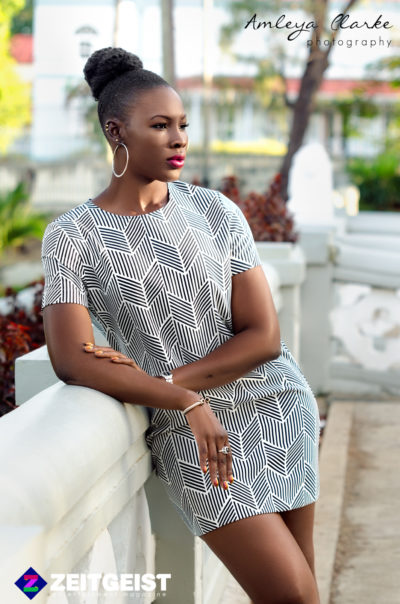 “Helena is in love with Demetrius,” Keshia says. “I think what happens is that I’m trying to get him to love me…But he is not in love with [me]…[Helena is] not a very confident person and she’s very wounded by his not liking her…”
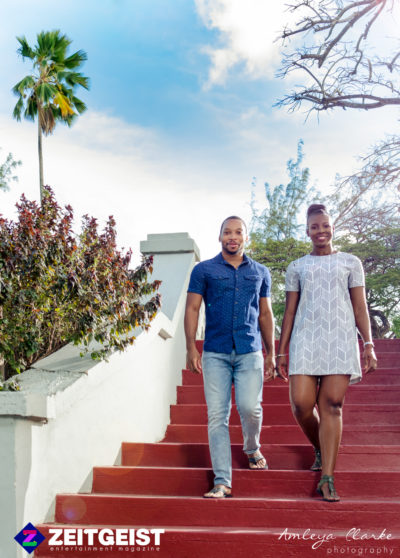 “He doesn’t like seeing himself.” Keshia explains, prompting him to laugh shyly.